Quick Answer: When weighing SEO vs PPC for small business growth, start with PPC (pay-per-click ads) if you need leads within weeks, and start with SEO if you can wait several months and want a lower cost per lead over time. When your budget allows, run both: ads capture demand now, while SEO builds visibility that keeps working after spending stops. The five-question scorecard below helps you decide.
Key Takeaways
- PPC starts faster, and SEO builds over time.
- PPC traffic stops when spending stops, while SEO pages keep working.
- Compare cost per customer, not cost per click.
- Both channels depend on a landing page that converts.
- 4Arcs Consulting offers both search engine optimization and Google Ads management for small businesses.
In This Guide
- What Is the Difference Between SEO and PPC?
- Is SEO or PPC Better for a Small Business?
- How Does the Google Ads Auction Decide What You Pay?
- When Should You Start With PPC?
- When Should You Start With SEO?
- How Do SEO and PPC Work Together?
- How Do You Compare SEO and PPC Costs Fairly?
- How Much Budget Do Ads Need to Be Useful?
- Should You Run Ads on Your Own Brand Name?
- Why Do Landing Pages Decide Results for Both Channels?
- What Do Real Results Look Like?
- What Mistakes Waste Money?
- Conclusion
What Is the Difference Between SEO and PPC?
SEO earns unpaid placement in search results by improving your site, content, and local presence. PPC buys placement and charges you each time someone clicks. SEO takes months to build, while PPC can start within days. One is an asset you build over time, and the other is traffic you rent.
| Factor | SEO | PPC |
|---|---|---|
| Time to first results | Months | Days to weeks |
| Cost model | Ongoing effort or retainer | Pay per click |
| When you stop | Results fade slowly | Traffic stops immediately |
| Control | Indirect | Adjustable at any time |
| Best use | Lasting visibility | Launches, tests, promotions |
Is SEO or PPC Better for a Small Business?
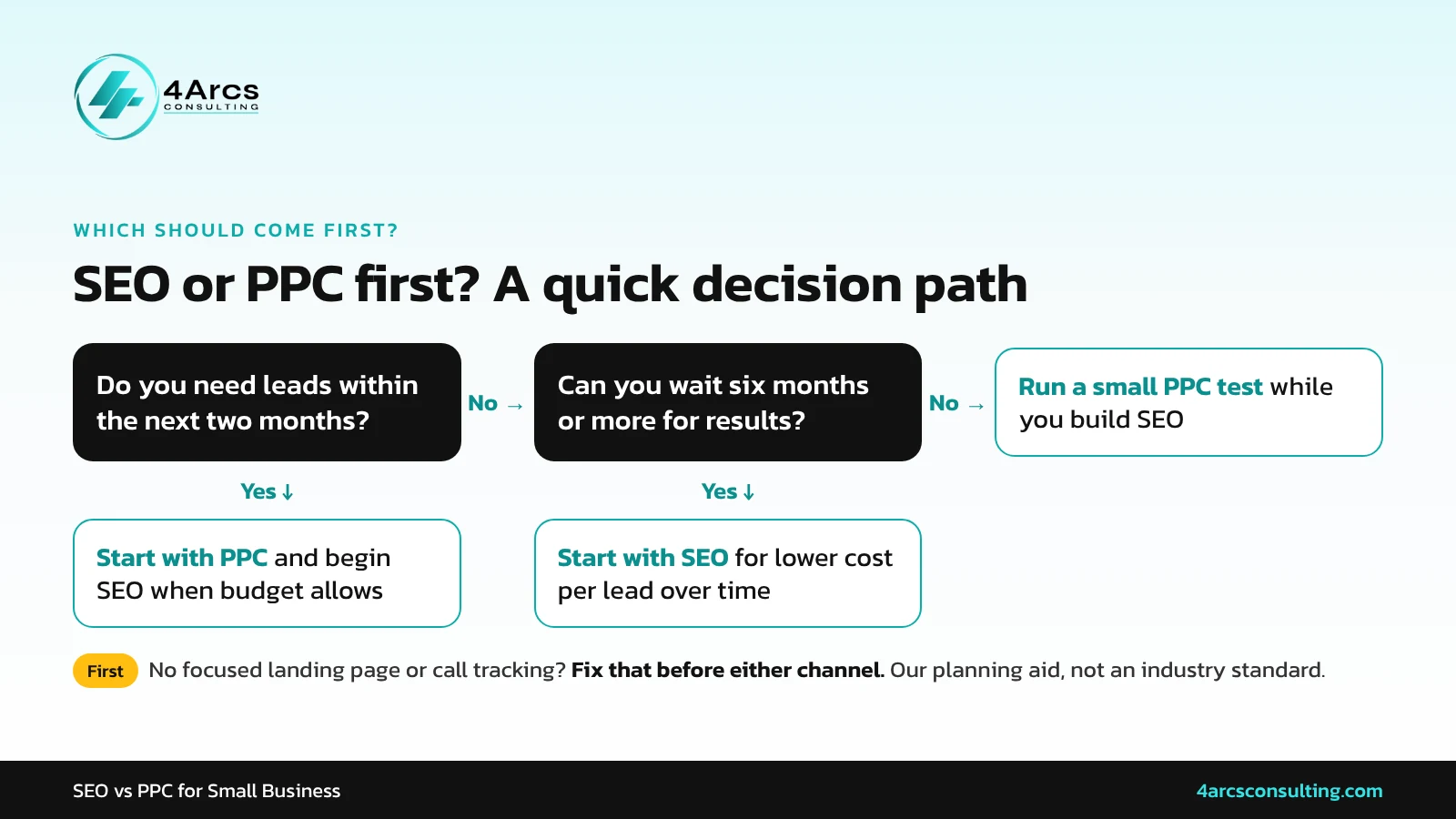
Neither wins in every case. The better choice depends on how soon you need leads, how long you can wait, what a click costs in your market, and whether your website is ready. Answer the five questions below, and let the answers point you to the channel that fits your situation today.
| Question | If yes, lean toward |
|---|---|
| Do you need leads within the next two months? | PPC |
| Can you wait six months or more for results? | SEO |
| Do customers research for weeks before they buy? | SEO plus helpful content |
| Does one customer earn you enough to cover costly clicks? | PPC |
| Does your site have a focused page and call tracking? | Either. If not, fix this first |
Count which channel got more answers. A tie suggests running a small PPC test while you build SEO. This scorecard is our own planning aid, not an industry standard.
How Does the Google Ads Auction Decide What You Pay?
Each time someone searches, Google Ads runs an auction among advertisers. Google says the outcome depends on factors such as your bid, the quality of your ad and landing page, and the context of the search. You pay when someone clicks, and a better-quality ad can win a position at a lower price.
The details are in Google’s explanation of the Google Ads auction. The takeaway is practical: a relevant ad pointing to a focused landing page can beat a bigger bid with a weak page.
When Should You Start With PPC?
Start with PPC when you need leads soon, are testing an offer, or have a seasonal window. It also shows which search phrases convert, which sharpens your SEO plan. A business opening in six weeks is a typical case, because it needs customers at launch, not in half a year.
On its Google Ads management page, 4Arcs Consulting describes a 15-minute intro chat, campaigns live within 48 hours, daily optimization, and tracking of phone calls, form submissions, and direction requests.
When Should You Start With SEO?
Start with SEO when you can wait several months, your customers research before they buy, or click costs would eat your margin. It suits established businesses with steady cash flow and a website worth sending people to. A weak site wastes both channels, so fix the most common website mistakes first.
- You have a steady flow of customers and can invest for the long term.
- Your customers compare options before they call.
- Your market has high click costs.
- Your site already explains your services clearly.
How Do SEO and PPC Work Together?
Together, the channels cover both speed and staying power. PPC brings immediate demand and shows which phrases convert, while SEO builds pages for those phrases that keep working without per-click costs. A phased plan lets ad data guide SEO priorities and lets organic pages gradually reduce your reliance on paid clicks.
| Months | PPC | SEO |
|---|---|---|
| 1 | Launch a small, focused campaign | Fix tracking, profile, and core pages |
| 2 to 3 | Cut poor phrases, keep winners | Build pages for phrases that converted |
| 4 to 6 | Hold budget steady | Early movement may appear |
| 7 to 12 | Reduce spend where you now rank well | Grow content and reviews |
This timeline is a typical planning pattern, not a promise. Results depend on your market, site, and competition.
How Do You Compare SEO and PPC Costs Fairly?
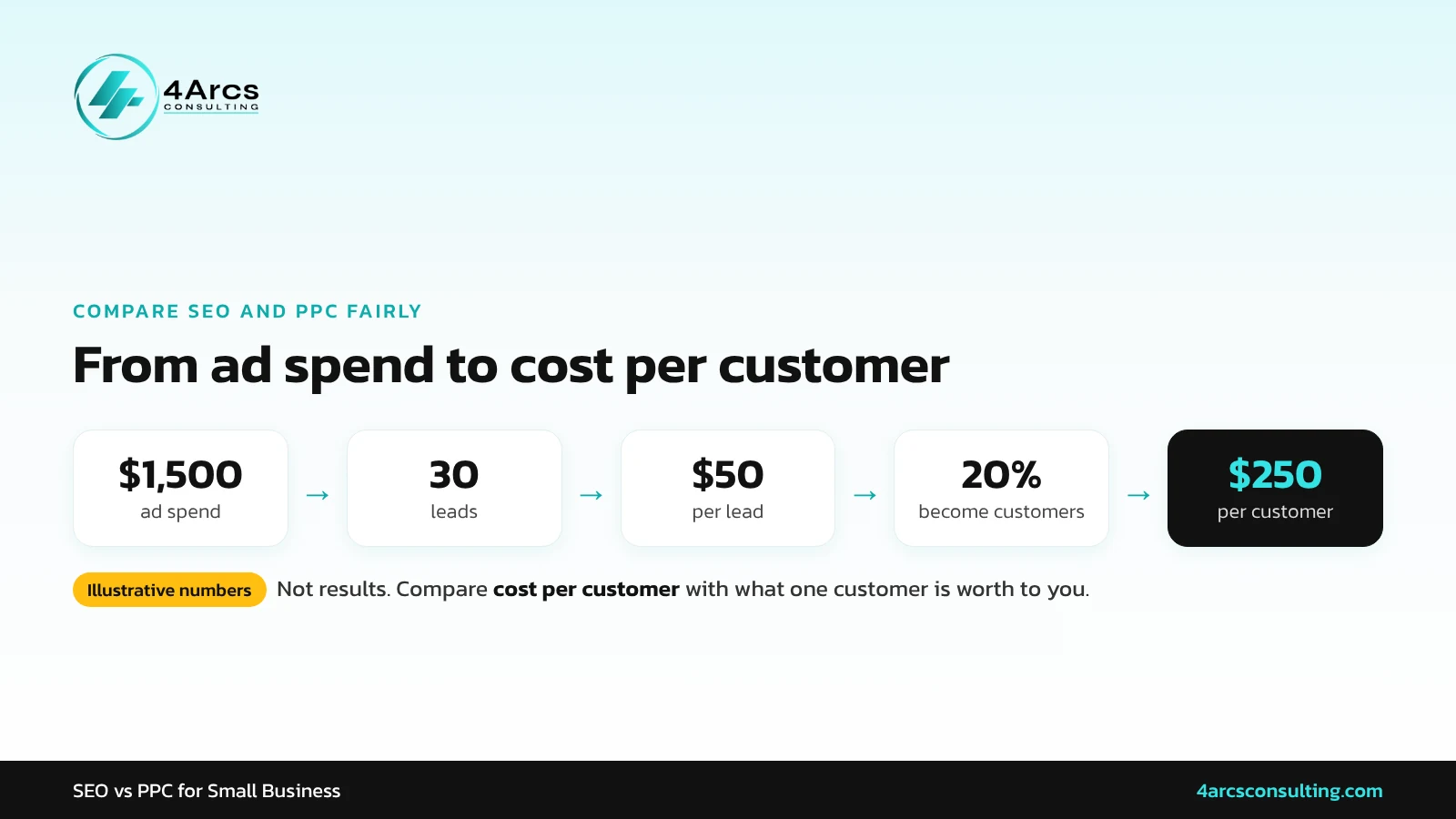
Compare cost per customer, not cost per click. A cheap click that never converts is expensive, while a pricier click that converts well may be the better buy. Divide your spend by leads, then divide that by the share of leads that become customers.
Illustrative example (invented numbers): A business spends $1,500 on ads and gets 30 leads, so each lead costs $50. If 20% of leads become customers, it wins 6 customers, so each customer costs $250. Compare that with what one customer is worth to you. Our guide to measuring marketing ROI walks through the full calculation.
| Metric | How to calculate |
|---|---|
| PPC cost per lead | Ad spend ÷ leads |
| SEO cost per lead | (Retainer + content) ÷ organic leads |
| Cost per customer | Cost per lead ÷ lead-to-customer rate |
The SBA’s market research guide can help you size your competition before you set a budget.
How Much Budget Do Ads Need to Be Useful?
An ad budget must be large enough to collect usable data. Our Google Ads page suggests a starting budget that allows at least three to four clicks per day in your market, and says the team analyzes local competition to recommend an amount. A budget that is too small produces too little data to learn from.
Ask any provider how it will set the budget, what it will do with the first month of data, and how you can pause or adjust spending.
Should You Run Ads on Your Own Brand Name?
Sometimes. If competitors bid on your business name, a small branded campaign can protect those searches. If nobody does and you already rank first for your name, you may not need it. Test with a small budget, and watch whether you lose calls or clicks when the ad is paused.
Why Do Landing Pages Decide Results for Both Channels?
Both channels send people to a page, and that page decides whether the visit becomes a lead. A focused page states the offer, shows proof, and gives one next step. Raising its conversion rate improves results from SEO and PPC alike, which is the work of conversion rate optimization.
What Do Real Results Look Like?
Results depend on the business, and the examples below are self-reported from our case studies, which do not state timeframes. Both used paid social rather than Google Ads, so treat them as examples of paid and organic marketing working together, not as PPC benchmarks.
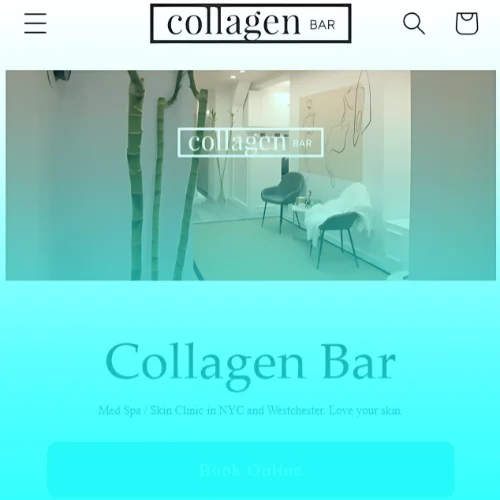
Collagen Bar NYC reports 900+ leads at a $2 cost per lead from paid social and custom landing pages. Absolute Aesthetics reports a $4.91 cost per lead and a 131% increase in organic traffic (published May 7, 2025). Results are not guarantees and vary by market.

What Mistakes Waste Money?
The biggest wastes are judging SEO after a few weeks, sending ad traffic to the homepage, skipping conversion tracking, and changing campaigns daily before data arrives. Treating either channel as a one-time purchase also fails, because both need ongoing attention.
- Targeting broad phrases that attract the wrong visitors
- Ignoring how fast you follow up on leads
- Stopping ads before enough data arrives
- Running ads to a site that does not work well on phones
Conclusion
Start with PPC if you need leads soon, start with SEO if you can wait and want lower costs over time, and run both when you can fund them. Judge each by cost per customer, and give SEO months, not weeks. A focused landing page improves both. 4Arcs Consulting can help you decide which order fits, so explore our search engine optimization service or Google Ads management.
Not Sure Whether SEO or PPC Should Come First?
FAQs
Ans. For some phrases, yes. Reduce spend gradually and watch lead volume before cutting further.
Ans. Do not count on it. We found no official Google documentation saying ad spend lifts organic rankings, so treat ads as a way to buy visibility and learn which phrases convert.
Ans. One coordinated team often does better because keyword data and landing pages are shared. Separate specialists can still work if they communicate.
Ans. Yes, and many businesses do. Start SEO early so the transition is smooth.
Ans. Search your main phrases and note who appears in ads and organic results. Review their pages for offers and structure, without copying them.
Ans. Not necessarily. Our Google Ads page says month-to-month agreements are available, and you should ask any provider about terms before you start.